

Ways to Practice a Growth Mindset: A Real-World Guide to Rewiring Your Thinking: 2026
Table of Contents

Introduction: What Is a Growth Mindset and Why Does It Matter?
Before you learn practical ways to practice a growth mindset, you need to understand what it really is. A growth mindset is the belief that your abilities, intelligence, and skills can be improved with effort, learning, and the right strategy. It is the opposite of a fixed mindset, where people believe “I am just like this, I cannot change.”
When you practice a growth mindset in daily life, your relationship with problems completely changes. Challenges stop looking like proof that you are not good enough. Instead, they become chances to grow. Failure stops feeling like the end, and starts feeling like feedback. You begin to think “I am still learning” instead of “I am not capable.”
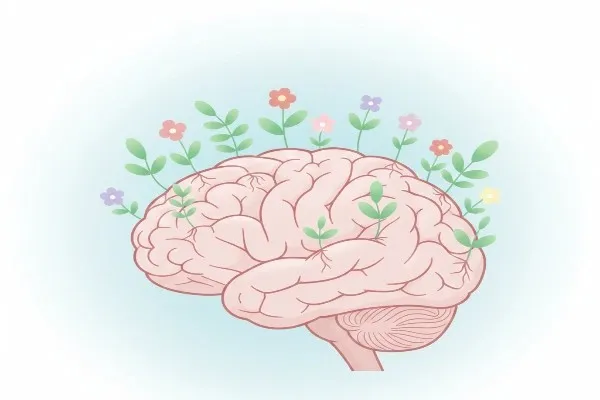
This mindset is powerful because it changes your actions. A person who believes they can improve will keep trying, keep learning, and keep showing up. Over time, that consistency creates real success in career, health, money, relationships, and self-confidence. So when we talk about ways to practice a growth habits, we are not talking about theory. We are talking about training your brain to support your dreams instead of fighting them.
Fixed Mindset vs Growth Mindset in Real Life
To understand ways to practice a growth mindset, it helps to see the difference between fixed and growth thinking in real situations. A fixed mindset says things like “I am bad at maths”, “I cannot speak English”, or “I am not confident.” It treats these as permanent labels. The mind closes the door.
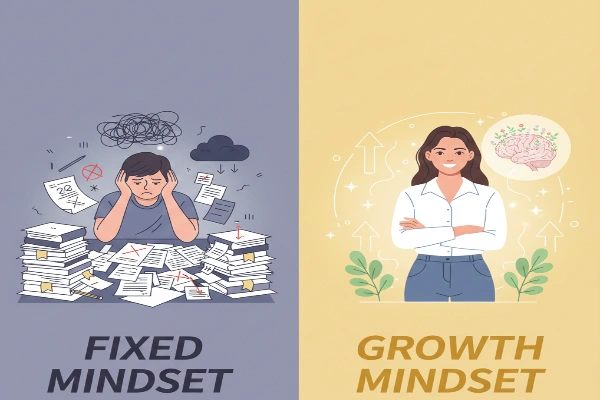
A growth mindset says “I am not good at this yet”, “I am learning”, or “I need more practice.” The situation stays the same, but the story changes completely. The mind leaves the door open. One mindset kills effort, the other mindset fuels effort. Over time, that small difference becomes a big gap in results.
In real life, the fixed mindset avoids feedback because it feels like a personal attack. The growth mindset seeks feedback because it feels like a chance to improve. The fixed mindset avoids hard tasks to protect ego. The growth mindset tries hard tasks to build skill. Once you see this difference, you can start using daily ways to practice a growth mindset and gently move yourself from fixed to growth.
May You Like: बिना निवेश ऑनलाइन पैसे कैसे कमाएँ (शुरुआती लोगों के लिए)
Improve Your Mindset by Changing Your Self-Talk
One of the most powerful ways to practice a growth habits is to start with your inner voice. Your self-talk is like background music in your head. If it is negative, harsh, and hopeless, you will feel stuck. If it is encouraging, realistic, and kind, you will feel stronger.
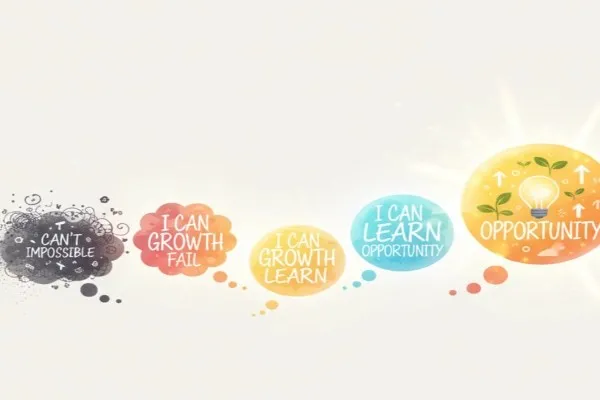
Start by noticing how you talk to yourself when something goes wrong. Do you say “I am so stupid”, “I always fail”, or “I will never learn this”? These are fixed mindset statements. They shut down learning. Instead, practice replacing them with growth mindset statements like “I made a mistake, but I can fix it”, “This is hard, but I can get better with practice”, or “I do not understand this yet.”
You can even write down a list of growth mindset sentences and keep them near your study table, laptop, or mirror. The goal is not to lie to yourself or act fake positive. The goal is to speak like a supportive coach, not like a cruel critic. Over time, this becomes one of the easiest and most natural ways to practice these habits in everyday life.
Ways to Practice a Growth Mindset by Embracing Challenges
Many people say they want success, but they secretly run away from any task that feels difficult. This is a fixed mindset pattern. One of the most important ways to practice a growth mindset is to start welcoming challenges instead of fearing them.
Think of every challenge as a gym for your brain. Just like your muscles grow when you lift something heavy, your mind grows when you face something difficult. The problem is not that challenges exist. The real problem is when we decide that “if it is hard, it is not for me.” That decision blocks growth.

You can practice a growth mindset by choosing small challenges intentionally. For example, try speaking up once in a meeting, reading a tougher book, learning a new skill, or waking up a bit earlier. When it feels uncomfortable, remind yourself, “This is how I grow.” Over time, your brain starts seeing challenges as training instead of threats. That is when growth really begins.
May You Like: What is Digital Marketing? A Complete Beginner’s Guide to Learn, Earn & Grow Online
Learn From Failure and Feedback Instead of Taking It Personally
If you want real ways to practice a growth mindset, you must change your relationship with failure and feedback. In a fixed mindset, failure feels like a final judgment on your worth. If you fail an exam, you think “I am dumb.” If a business idea fails, you think “I am not meant for this.” You and your result become the same.

In a growth mindset, you separate the two. The result is data, not identity. You think “This method did not work. What can I change?” You still feel bad for some time, because you are human, but you do not stay stuck there. You move from “What is wrong with me?” to “What can I do differently?”
Next time you get feedback or face failure, write down three things: what happened, what you can learn, and what you will try next. This simple exercise stops your mind from going into shame and keeps it in learning mode. That shift is one of the most practical ways to practice a growth mindset in studies, work, relationships, and personal goals.
Focus on Effort, Process and Small Wins
A powerful way to practice a growth mindset is to put more attention on effort and process instead of only result. Most of us judge ourselves only by the final outcome. Did I clear the exam? Did my post get many likes? Did I get the job? When the answer is “no”, we feel like we are failing in life.

But growth mindset thinking looks deeper. It asks: “Did I show up?”, “Did I practice?”, “Did I improve even 1% today?” You begin to celebrate effort and small wins. Maybe you did not clear the exam yet, but you studied more consistently than last time. Maybe your blog post did not go viral, but you wrote better than your first one. These are small wins, but they are real.
To practice this, write down three small wins at the end of each day. It could be “I read for 20 minutes”, “I did not give up during a tough task”, or “I started something I was avoiding.” This builds your growth mindset because it trains your brain to value progress, not just perfection.
Set Learning-Based Goals, Not Just Outcome Goals
Another practical way to practice a growth mindset is to change the design of your goals. Most people create only outcome goals. For example: “I want 90% in exams”, “I want to lose 10 kilos”, or “I want 10,000 followers.” These are not wrong, but they create pressure and fear.

Growth mindset goals are different. They focus on learning and behaviour, not just the final result. For example: “I will study for 2 hours a day”, “I will exercise 4 days a week”, or “I will post valuable content three times a week.” These are learning-based goals. You control them directly.
When you mix both types of goals, something powerful happens. The outcome goal gives you direction, and the learning goal gives you daily action. You stop thinking “I have failed until the final result comes.” Instead, you think “Every step I complete means I am already succeeding.” This is one of the most realistic ways to practice a growth mindset in daily life.
Ways to Practice a Growth Mindset by Choosing Your Environment Wisely
Your environment has a big impact on your mindset. If you spend your time with people who complain, blame others, and never try to change, it becomes harder to maintain a growth mindset. On the other hand, if you surround yourself with people who talk about ideas, skills, habits, and improvements, your thinking automatically changes.

One very practical way to practice a growth mindset is to upgrade your inputs. Follow accounts that share learning, growth, and self-improvement instead of only gossip and drama. Listen to podcasts that teach something. Watch videos that explain skills, not just random entertainment all day. Read books, blogs or newsletters that stretch your thinking a little.
You do not have to remove everyone from your life. You just need to make sure that at least some part of your daily environment is growth-focused. Think of it like a mental diet. What you consume, you eventually become. If you want a growth mindset, you must feed your brain growth content regularly.
Practice Gratitude and Reflection to Support a Growth Mindset
Many people underestimate how powerful gratitude and reflection are as ways to practice a growth mindset. When you are always focused on what is missing, what is not working, or how far you still have to go, your mind gets tired and negative. It becomes easy to slip back into a fixed mindset.

Gratitude is not pretending everything is perfect. It is simply recognising what is already good. You can be grateful for your ability to learn, the people who support you, the resources you have, and the progress you have already made. This makes your mind more open and cooperative. Growth feels possible, not forced.
Reflection is the second part. Once a week, sit quietly and ask yourself: “Where did I grow this week?”, “What did I handle better than before?”, “Where did I stop because of fear?” When you reflect without judging yourself, you start seeing clear patterns. That awareness is one of the strongest ways to practice a growth mindset because it turns your life into a classroom instead of a courtroom.
Build Daily Habits That Match a Growth Mindset
If you truly want long-term ways to practice a growth mindset, you cannot depend only on motivation. You need habits. Motivation is like the weather: it comes and goes. Habits are like roots: they hold you steady.

Build at least one small daily habit that supports your growth. It could be reading 10 pages of a good book, journaling your thoughts for 5 minutes, practising a new skill for 20 minutes, or revising your goals every morning. The action itself can be tiny. What matters is that it reminds your brain every day: “I am someone who grows.”
Over time, these small habits change your identity. You stop saying “I wish I had a growth mindset” and start feeling “I am a person who learns and improves.” This identity shift is the deepest level of growth mindset practice.
Use Better Questions: Simple Ways to Practice a Growth Mindset All Day
One of the most overlooked ways to practice a growth mindset is to change the questions you ask yourself. Fixed mindset questions sound like this: “Why am I like this?”, “Why am I so unlucky?”, “Why does nothing work for me?” These questions push you into helplessness.

Growth mindset questions are different. They sound like: “What can I do differently next time?”, “What is this situation trying to teach me?”, “Who can I learn from?”, “What small step can I take today?” These questions activate your creativity and courage. Your brain starts looking for solutions instead of reasons to give up.
Next time you face a setback, pause and ask yourself one good question: “How can I use this to grow?” If you make this a habit, you will practice a growth mindset all day, even in small situations.
May you like: The Most Common Money Mistakes That Kill Financial Discipline Habits 2025
Be Patient With Yourself While You Practice a Growth Mindset
Finally, one of the most important ways to practice a growth mindset is to be patient with yourself. Ironically, many people approach growth mindset with a fixed mindset. They think, “I must change overnight”, “I should never feel negative again”, or “I should always be confident now.” When they fail, they say, “See, I cannot change.”
But growth itself takes time. Your brain has old patterns, old fears, and old habits. You are not weak because you fall back sometimes. You are human. Practising a growth mindset means accepting that progress is not a straight line. Some days you will feel strong and focused. Some days you will feel tired and doubtful. Both are part of the journey.
Instead of asking, “Am I perfect yet?”, ask “Am I a little better than before?” If the answer is yes, you are on the right path. Keep going. Every time you choose effort over excuses, learning over ego, and patience over panic, you are living the growth mindset you wanted.
Final Thoughts: Growth Mindset Is a Daily Practice, Not a Label
A growth mindset is not a badge you wear once and forget. It is something you practise in small ways every single day. You practise it when you try again after failing. You practise it when you ask for help instead of pretending you know everything. You practise it when you choose to learn instead of complain.
The best ways to practice a growth mindset are simple but powerful:
change your self-talk, welcome challenges, learn from feedback, focus on effort, set learning goals, choose a better environment, build tiny habits, ask better questions, and stay patient with your progress.
You do not have to be perfect to grow. You only have to stay willing.
If you keep practising, one day you will look back and realise: you did not just change your mindset, you changed your entire life.
Also Read in Hindi : ग्रोथ माइंडसेट कैसे विकसित करें: सफल लोगों की अपनाई गई शक्तिशाली आदतें
Audiobook in Hindi :ग्रोथ माइंडसेट कैसे विकसित करें: सफल लोगों की अपनाई गई शक्तिशाली आदतें
If this article helped you understand practical ways to practice a growth mindset, share it with someone who needs encouragement today.
Your small act can spark someone else’s transformation.
Want more mindset, motivation, and personal growth content?
Subscribe to my blog for weekly life-changing insights: RichaInspires.in
Stay consistent. Stay curious. Stay growing.
FAQ: Ways to Practice a Growth Mindset
1. What is the first step to practice a growth mindset daily?
The first step is awareness. Notice when your thoughts sound fixed—like “I can’t” or “I always fail.”
Gently replace them with growth-focused thoughts such as “I’m learning” or “I’ll try a new method.”
This small shift builds the foundation for a real growth mindset.
2. How long does it take to develop a true growth mindset?
There is no fixed timeline.
For some, it takes weeks; for others, months. But the moment you start practising daily habits—reflection, small challenges, effort-based goals—you begin seeing real internal changes.
3. Can a growth mindset help in career and financial success?
Absolutely.
Growth mindset improves your willingness to learn skills, handle challenges, overcome failures, and stay consistent.
These qualities directly help you grow in income, career, and opportunities.
4. Why do people struggle to maintain a growth mindset?
Because old habits and fears return easily.
Growth mindset requires patience, self-awareness, and an environment that supports learning.
Progress is not linear—but consistency makes the mindset stronger.
5. Do small habits really help in building a growth mindset?
Yes.
Growth doesn’t come from one big moment. It comes from daily micro-habits—reading 10 minutes, learning a new skill, tracking your progress, or asking better questions.
Small actions shape identity.
6. Is growth mindset only about positive thinking?
No.
It is about realistic action-based thinking.
A growth mindset doesn’t deny problems—it teaches you to learn from them and find solutions instead of giving up.
7. How can I practice a growth mindset when I’m feeling discouraged?
Use these three steps:
1- Pause your emotional reaction
2- Ask: “What is this trying to teach me?”
3- Take one small step forward
This resets your thinking and brings you back into growth mode quickly.




Pingback: ग्रोथ माइंडसेट कैसे विकसित करें: सोच बदलने के 15 असरदार तरीके
Pingback: Developing self discipline for success in life 2025-2026 - Richa Inspires – Motivation & Self Growth Blog
Pingback: How to Stay Consistent in Life (Even When Motivation Fades) 2026 - Richa Inspires – Motivation & Self Growth Blog
Pingback: जीवन में निरंतरता कैसे बनाए रखें जब मन बार-बार टूटने लगे (2026) - Richa Inspires – Motivation & Self Growth Blog
Pingback: डिजिटल मार्केटिंग क्या है? कैसे काम करती है ? और पैसे कैसे कमाए - Richa Inspires – Motivation & Self Growth Blog
Pingback: 7 AI Skills to Learn in 2026 That Can Grow Your Career Faster - Richa Inspires – Motivation & Self Growth Blog